Reels under 10 seconds win — but only if your hook holds 1.7 seconds

"Short Reels always win" is the most repeated bad advice in social right now. It's half right, which is the most dangerous kind of wrong. Adam Mosseri publicly confirmed in January 2025 that watch-time is the number one ranking signal for Reels — not completion rate, not length, watch-time. That single clarification changes the math entirely. Here's what to do about it.
What Mosseri actually said
In a series of Instagram posts in January 2025, Mosseri laid out the ranking signals in priority order:
- Watch-time — total seconds spent, the dominant signal in 2026.
- Replays and shares — repeat consumption + organic distribution.
- Comments and saves — engagement depth, but ranked below watch-time.
- Likes — barely register anymore. Don't optimize for them.
The headline takeaway: Instagram is optimizing for total seconds spent, not for percentage completed.
This is a bigger deal than it sounds. Under a completion-rate regime, a 9-second Reel that 80% of viewers finish is the optimal asset. Under a watch-time regime, a 30-second Reel held at 50% retention beats it — because 15 seconds of watch-time is more than 7.2 seconds. The shape of the winning Reel just changed.
But — and this matters — short Reels still have advantages. Sub-15-second Reels get roughly 67–72% completion rates and 34% more algorithmic surfacing in the discovery layer, plus 2–3x more replays. So short still wins on raw distribution. Long wins on watch-time accumulation. The real question is which one your specific content can actually deliver on.
The 1.7-second window
None of this matters if your hook doesn't land. Buffer's research on Reels and TikTok shows the first 1.7 seconds is the decision window. After that, the viewer either keeps watching or scrolls. There is no middle ground.
In 1.7 seconds, you have time for: one visual pattern interrupt, three to four words of on-screen text, or a single sound effect. That's it. Anything else is decoration the algorithm will never see because the viewer already swiped.
The brands hitting consistently are obsessive about the first frame. Not the first three seconds — the first frame. The thumbnail that loads while the video buffers. The single image that has to do the work of stopping the thumb. If you don't art-direct that frame specifically, you're leaving 90% of your potential reach on the table.
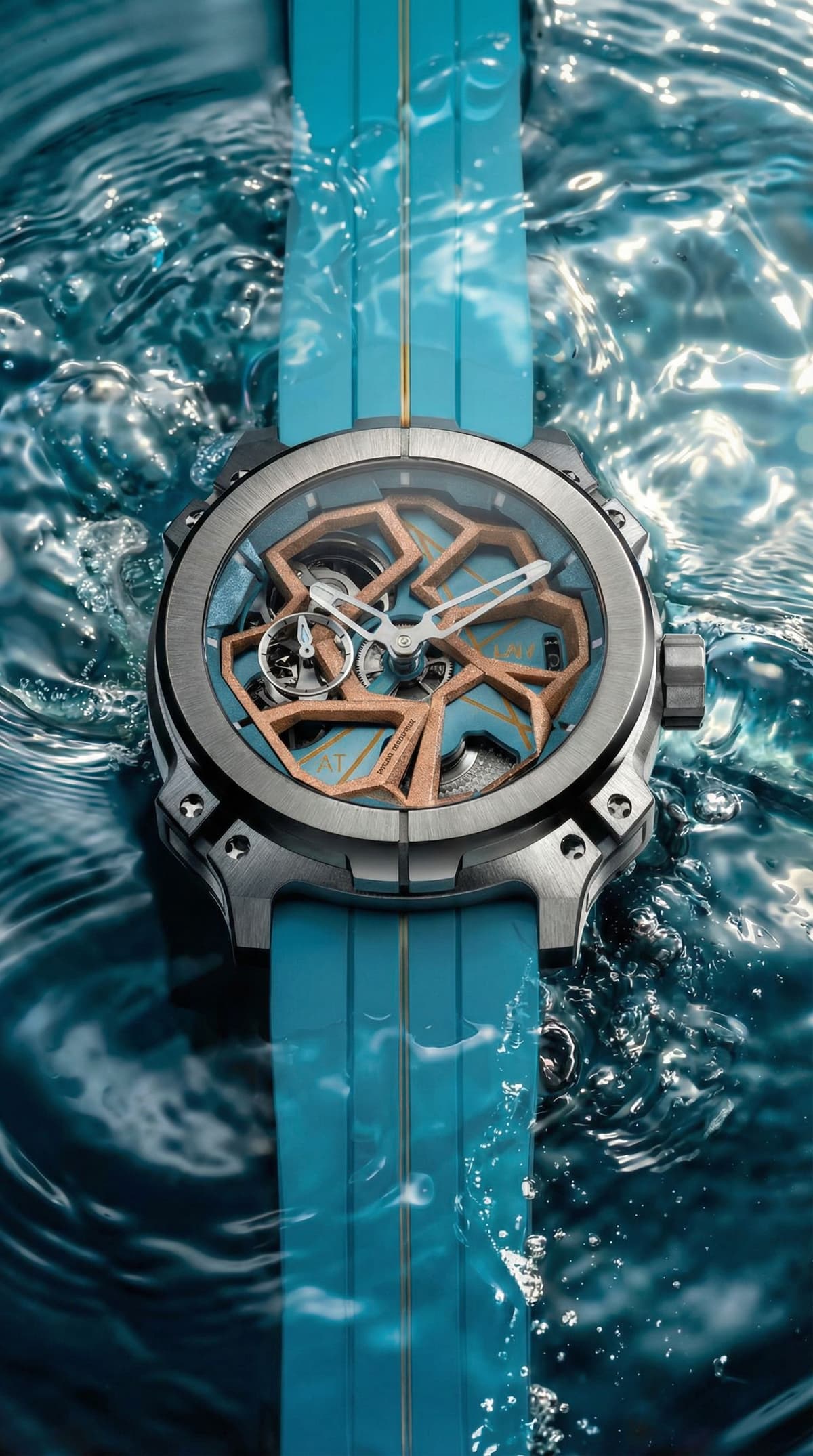
The first frame should feel like something is already happening. Anything else is decoration the algorithm will never see.
Short Reels: when they win
Use short — 6 to 10 seconds — when your message is one beat. One product reveal. One transformation. One transition. One joke. The completion rate compounds with replays and shares because the viewer can re-experience the whole thing in less time than it takes to read this sentence.
Short also wins for top-of-funnel discovery. The algorithm surfaces short Reels more aggressively to non-followers because the cost-per-impression of "did the viewer abandon" is lower. If your goal is reach to new audiences, short is the move.
What kills a short Reel: trying to fit a narrative arc into 8 seconds. There's no time. If you have a story, save it for long. If you have a moment, that's short.
Long Reels: when they win
Use long — 25 to 60 seconds — when you have a story, a tutorial, or a reveal that earns the runtime. Watch-time aggregates fast on long content if retention holds, and the algorithm rewards aggregate watch-time more than any other signal.
Long wins for bottom-of-funnel and follower retention. Your existing audience will give you more rope. They're here for the brand, not the hook. A 45-second product story to your follower base often outperforms a 9-second clip to the same audience because the relationship is already built.
The trap: assuming long content can be loose. Retention is unforgiving on long Reels. You need a payoff every 5–7 seconds — a new visual, a new piece of information, a new beat. If you let momentum drop, viewers drop, and your watch-time graph collapses.

How to engineer a hook that holds
Three rules to engineer a hook that holds:
- Lead with movement or contrast in frame one. Static product shots with text-on-top are dead on arrival.
- Tell the viewer what they're about to see, fast. Curiosity gap, payoff promise, or surprise — pick one.
- Design the audio for sound-off and sound-on. 60% watch muted in feed; sound-on viewers convert at 2–3x the rate.
First: lead with movement or contrast in frame one. A static product shot with text-on-top is dead on arrival. Movement, color shift, or unexpected scale signals the brain to keep watching. The first frame should feel like something is already happening.
Second: tell the viewer what they're about to see, fast. "Watch this turn into…" "Three seconds in, this gets weird." "I tested this for 30 days." The viewer needs a reason to invest the next 1.7 seconds. Curiosity gap, payoff promise, or surprise — pick one.
Third: design the audio for sound-off and sound-on. 60% of Instagram users watch with sound off in feed. Captions matter. But sound-on viewers convert at 2–3x the rate, so the audio still needs to earn the unmute. Both audiences exist on the same Reel.
Disoya's AI Video produces 8-second 1080p clips with synced audio, optimized for that exact short-form sweet spot where completion rates are highest. The First & Last frame control lets you art-direct the thumbnail frame — the one the algorithm shows before anyone presses play — instead of leaving it to chance. When you need long, chain two clips together with first-frame matching. The hook still has to come from you. But the gap between "I have an idea" and "the asset is in the calendar" went from a week to about ten minutes.