AI product video: how to create cinematic 8-second clips without a camera
Video is no longer optional on social media. Instagram, TikTok and YouTube all push short-form clips harder than static images, and the brands publishing videos every day are eating the algorithm. The problem: video used to mean cameras, lighting, editing software and hours of post-production.
AI video generation flipped the equation. Today, you can take any product photo — even one shot on your phone — and turn it into a cinematic 8-second clip in 1080p, with native AI audio, in under a minute. No camera, no editor, no soundtrack hunt.
Why 8 seconds is the sweet spot
Reels, Shorts and TikTok all reward fast hooks. Studies on the 2026 algorithms show retention drops sharply after 7-9 seconds for product content. An 8-second clip nails the platform sweet spot: long enough to show the product in motion, short enough to keep watch-time at 100%.
It also fits the loop format perfectly — when a viewer reaches the end, the clip restarts seamlessly. Two or three loops still feels intentional, not boring. Three loops on a 30-second clip would feel like an eternity.
First and last frame control changes everything
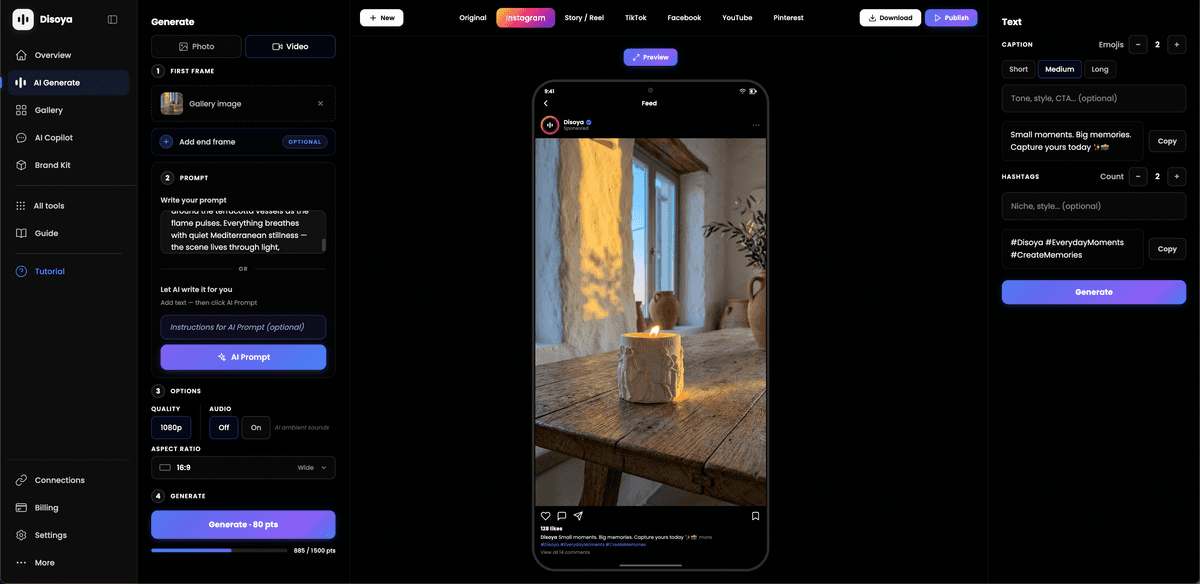
The breakthrough in 2026 wasn't just better video models — it was control. Modern AI video tools (like Disoya's generator) let you specify both the first frame AND the last frame. The model figures out the cinematic motion in between.
This means you can show your product transitioning from one angle to another, splashing into water, materializing in a new scene — all directed exactly. No more hoping the AI gives you something usable. You set the start and end, the model fills the middle with realistic motion, lighting and physics.
Native audio: no more searching royalty-free libraries
Generated videos now ship with AI-generated audio that matches the scene — water splashes when the product hits liquid, mechanical clicks when it locks into place, ambient ASMR for unboxing-style content. This used to require a separate sound design pass. Now it's baked in.
The volume play
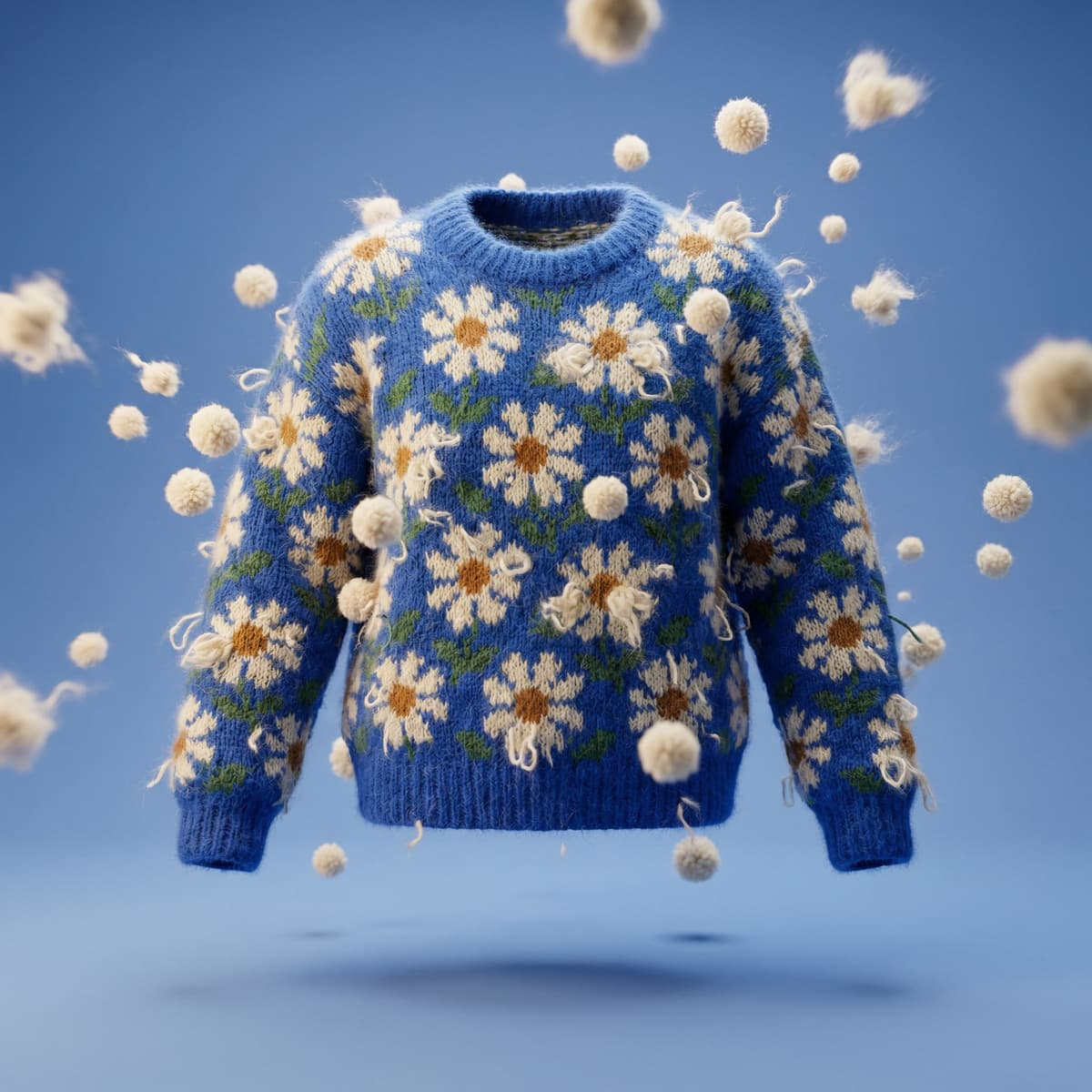
A traditional video shoot produces 2-5 usable clips per session. With AI, you can generate 50 unique cinematic clips in a single afternoon — same product, different scenes, different moods, different angles. That's 50 days of Reels content, ready to test, ready to publish.
The brands winning Reels in 2026 aren't producing the most expensive video. They're producing the most relevant, most consistent video — every single day. AI is the only way to maintain that cadence without burning out.
How to start
Take a clean phone photo of your product on a plain surface. Drop it into Disoya, type a one-line scene description ("perfume bottle splashing into red liquid with cherries"), pick your aspect ratio (9:16 for Reels, 16:9 for YouTube), hit generate. In about 50 seconds you have a publishable cinematic clip with audio. Repeat tomorrow with a different scene.
That's the new content stack: one product photo, ten scenes, ten daily Reels. The brands moving early are already building libraries of 100+ clips per product — testing, iterating, scaling. The barrier to professional video has never been this low.